





An Integrated Ground Improvement Solution for Stiff-over-Soft Reclaimed Ground
Reclaimed sites developed for petrochemical facilities often present a challenging combination: a relatively stiff upper fill layer overlying highly compressible marine deposits.
A fully piled solution may underutilize the bearing capacity of the upper “hard crust,” resulting in unnecessary cost and construction time. Shallow ground improvement alone, however, cannot adequately control the long-term settlement and differential deformation caused by the underlying soft marine soils.
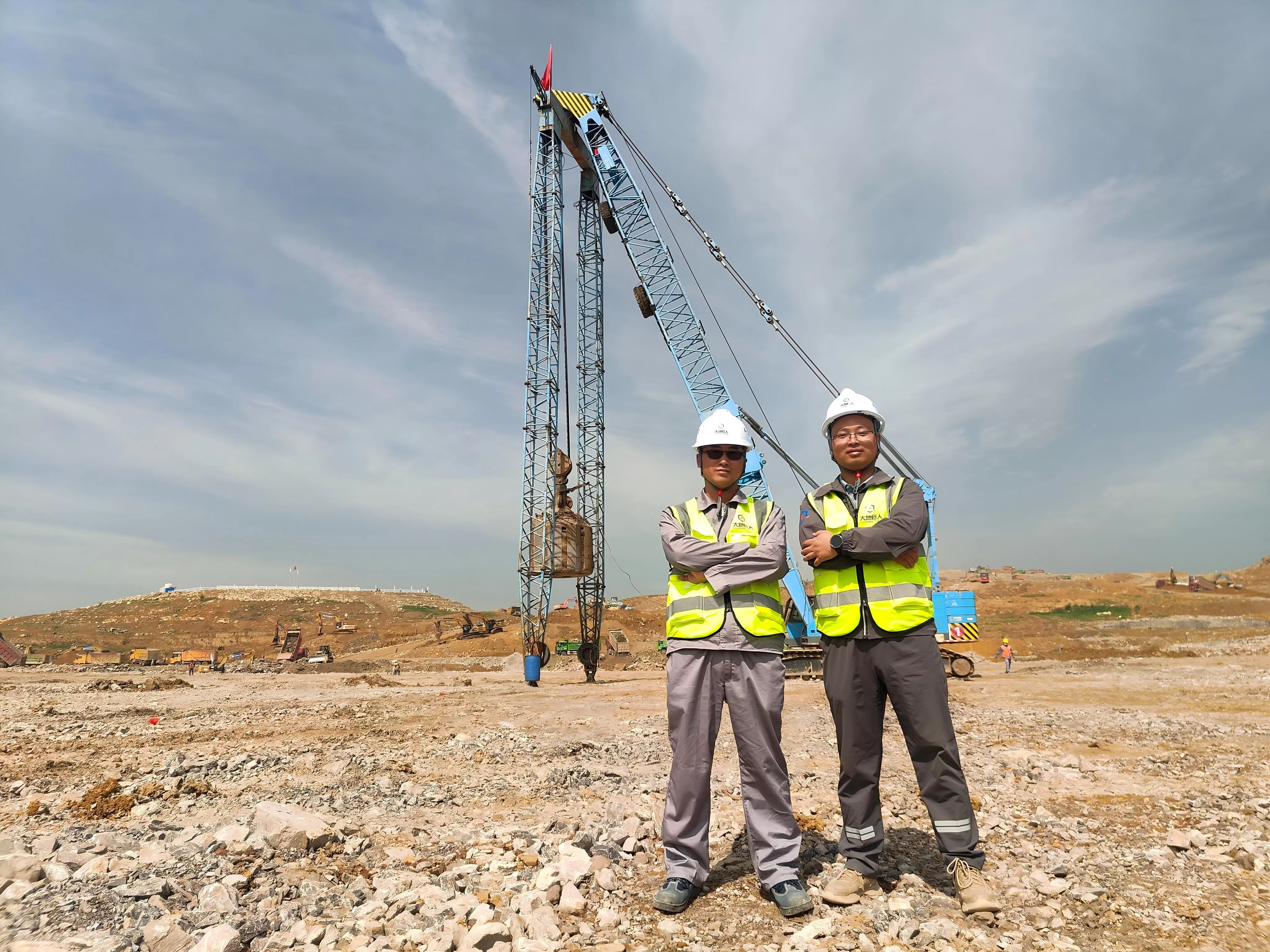
At a project within the CNOOC Shell Huizhou Phase III development, the subsurface profile was typical of stiff-over-soft reclaimed ground — a thick layer of quarry-run rockfill placed during hill excavation and site formation, sitting directly above a thick layer of soft marine silt.
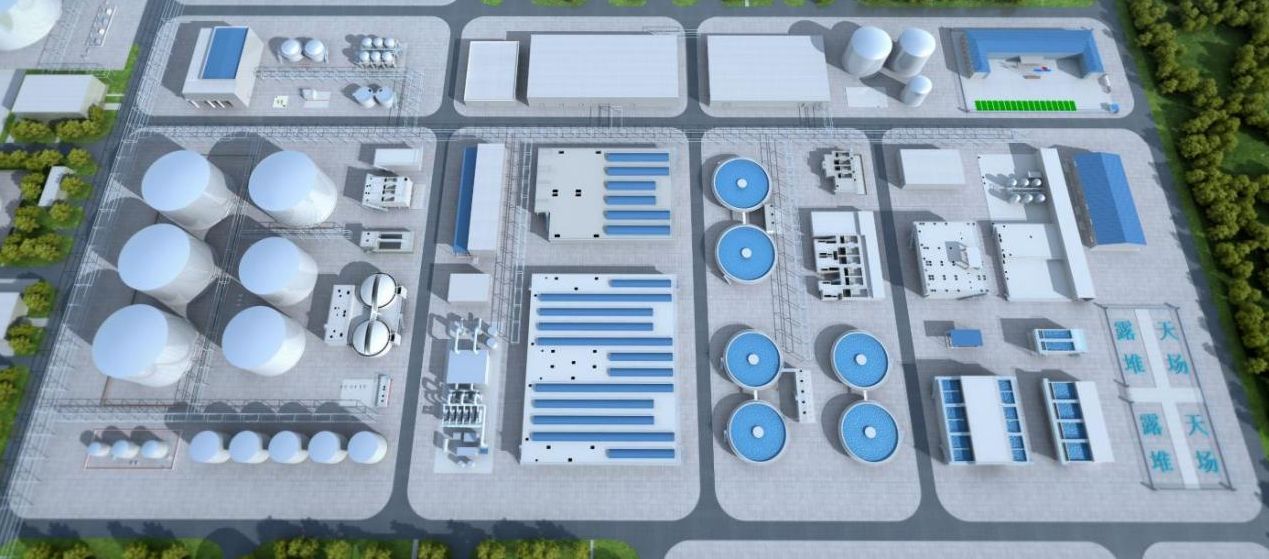
To address these conditions, QUAMBO worked with a leading petrochemical engineering institute and university researchers to develop an integrated “Enhanced Dynamic Compaction + Rigid-Pile Composite Foundation” solution.
Enhanced Dynamic Compaction was used to further densify and homogenize the upper rockfill, transforming it into a stiff, plate-like working layer. In heavily loaded or settlement-sensitive areas, prestressed high-strength concrete (PHC) piles were installed as long structural “legs,” extending through the soft marine deposits and bearing on the deeper gravel stratum.
Together, the stiff upper layer and deep pile elements form what we call the Ground Strider—an integrated system in which reinforcement elements, improved soil, the stiffened load-transfer grid and piles work together to carry structural loads and control deformation. The ground improvement works have now been completed, and an extensive array of embedded sensors and monitoring instruments has been installed, allowing the long-term load-transfer behaviour and settlement performance of the foundation system to be continuously evaluated.
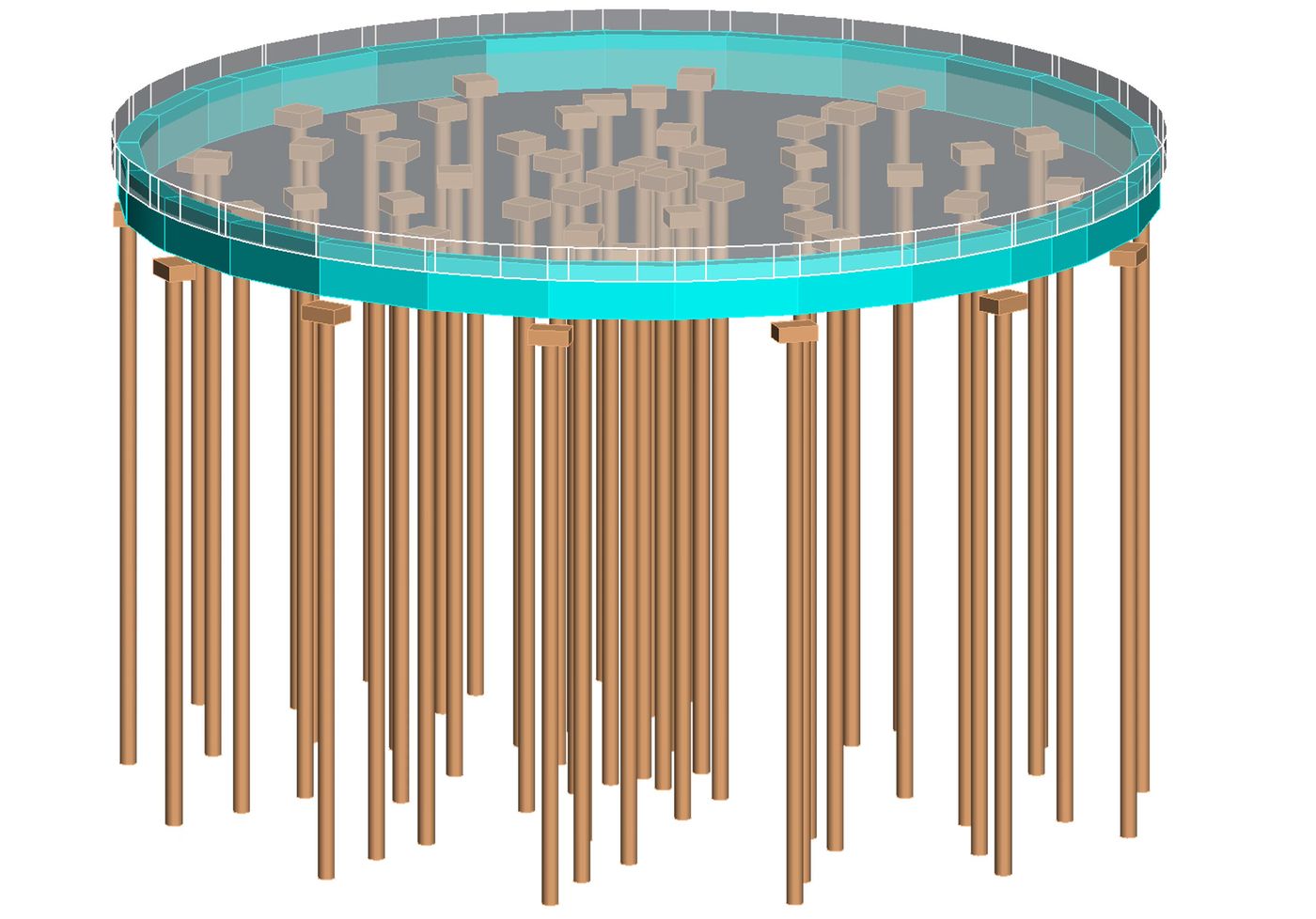
The Ground Strider concept: a stiff, plate-like upper layer supported by long pile “legs” extending to competent strata
Once the site’s geotechnical behaviour had been established, the ground improvement design adopted a zoned combination of Enhanced Dynamic Compaction and rigid piles.
Across areas supporting relatively light buildings and structures, Enhanced Dynamic Compaction increased the stiffness, uniformity and bearing capacity of the upper fill. This plate-like improved layer—the “body” of the Ground Strider—was designed to satisfy most of the site’s bearing-capacity and deformation-control requirements. In areas occupied by heavily loaded or deformation-sensitive facilities, such as process units and storage tanks, PHC piles were installed through the soft marine deposits and founded on the underlying gravel layer, working together with the dynamically compacted upper ground to form a rigid-pile composite foundation.
This design makes effective use of the site’s existing stiff upper stratum while providing deep support only where technically necessary. Compared with a conventional full-site piling scheme, it significantly reduces construction time and overall foundation cost.
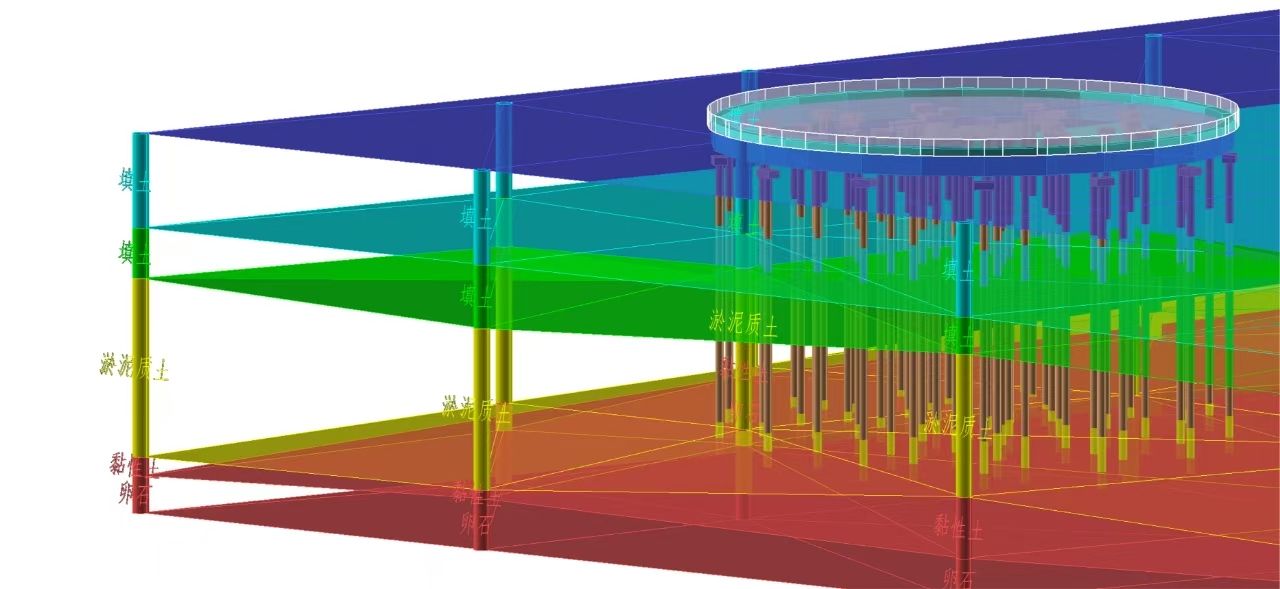
Finite element analysis of the rigid-pile composite foundation
Before full-scale construction began, large-plate static load tests were carried out to simulate the anticipated field loading conditions. Settlement and unloading rebound were monitored under staged loading to evaluate the bearing capacity, deformation modulus and load-settlement response of the improved ground.
Pile and soil stress data were also collected to assess load sharing between the piles and surrounding soil, differences in behaviour between the dynamically compacted and piled areas, and changes in foundation response as loading increased. The test results were used to verify and refine the design and construction parameters before large-scale implementation, providing a reliable basis for confirming the required bearing capacity and settlement-control criteria.
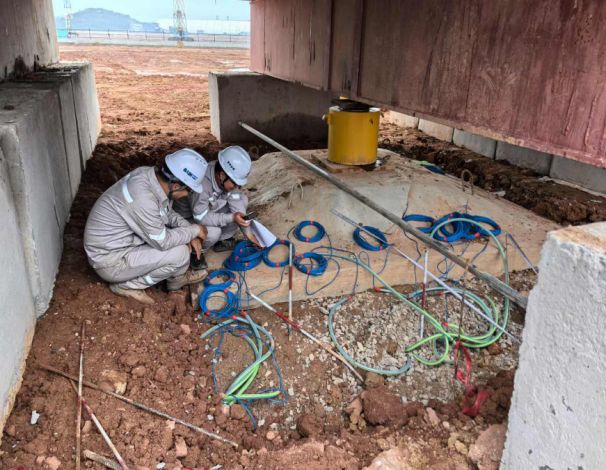
On-site large-plate load testing and performance verification
This established a continuous engineering loop—from concept development and field testing to construction, long-term monitoring and back-analysis. Each stage generated evidence for the next, allowing the design to be progressively verified and improved under actual site conditions.
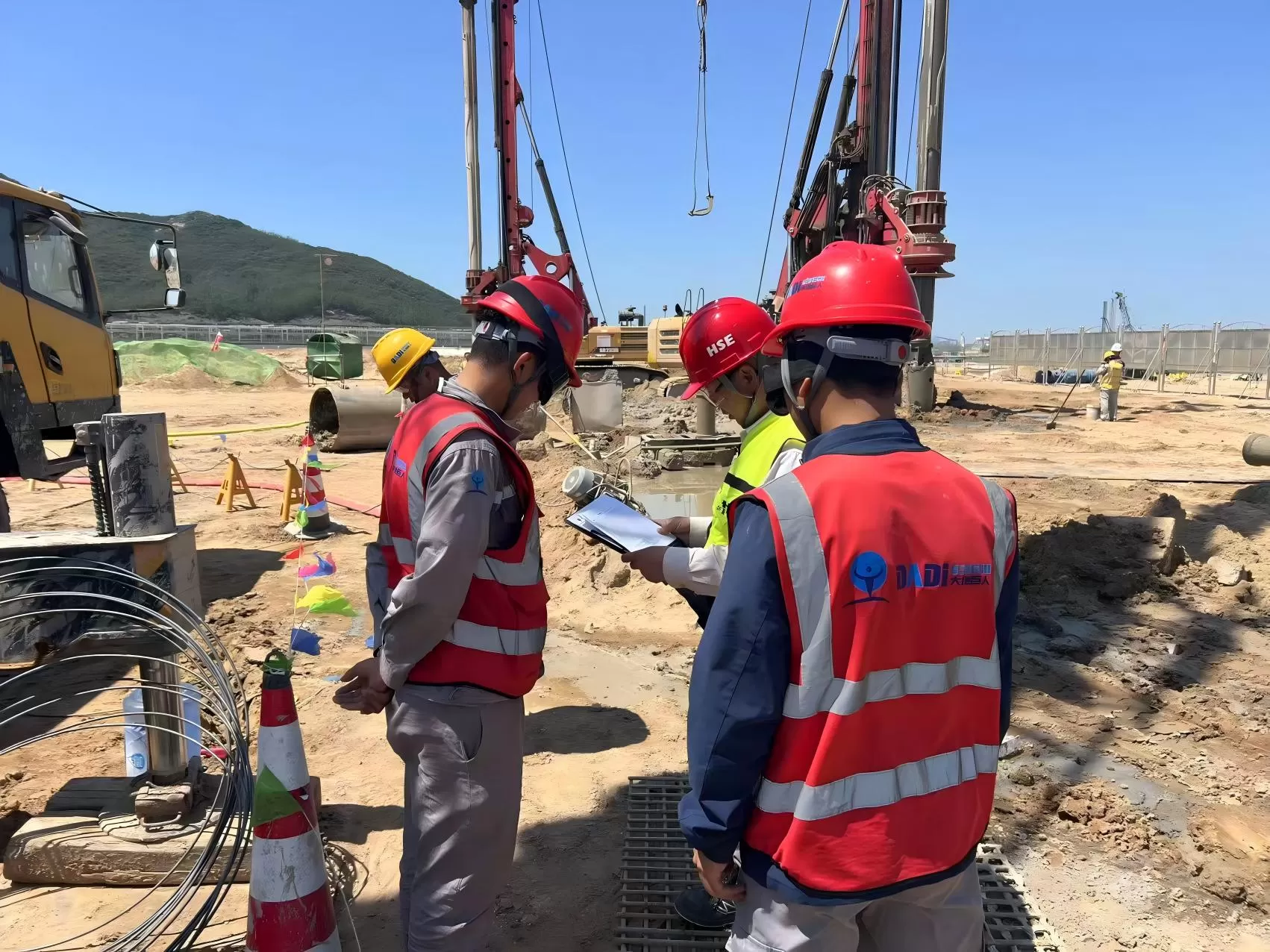
During ground improvement works, the site was equipped with strain gauges, earth-pressure cells, and horizontal and vertical inclinometer casings, all connected to a centralized data acquisition and analysis system. The monitoring programme tracks internal forces within the rigid piles, load transfer and interaction between piles and soil, stress changes within the shallow and deep soil layers, and horizontal and vertical ground movement.
Monitoring data are continuously compiled and compared with the predicted design response, providing an evidence-based means of verifying construction quality and foundation performance.
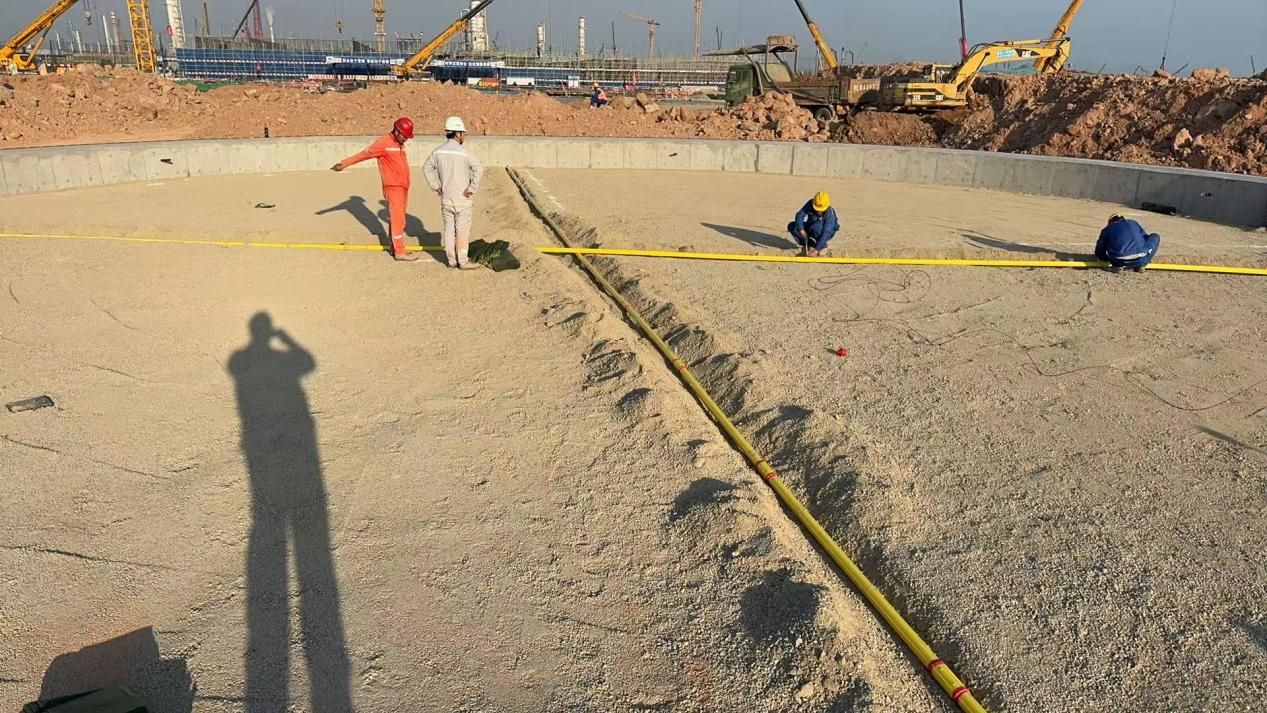
On-site settlement monitoring
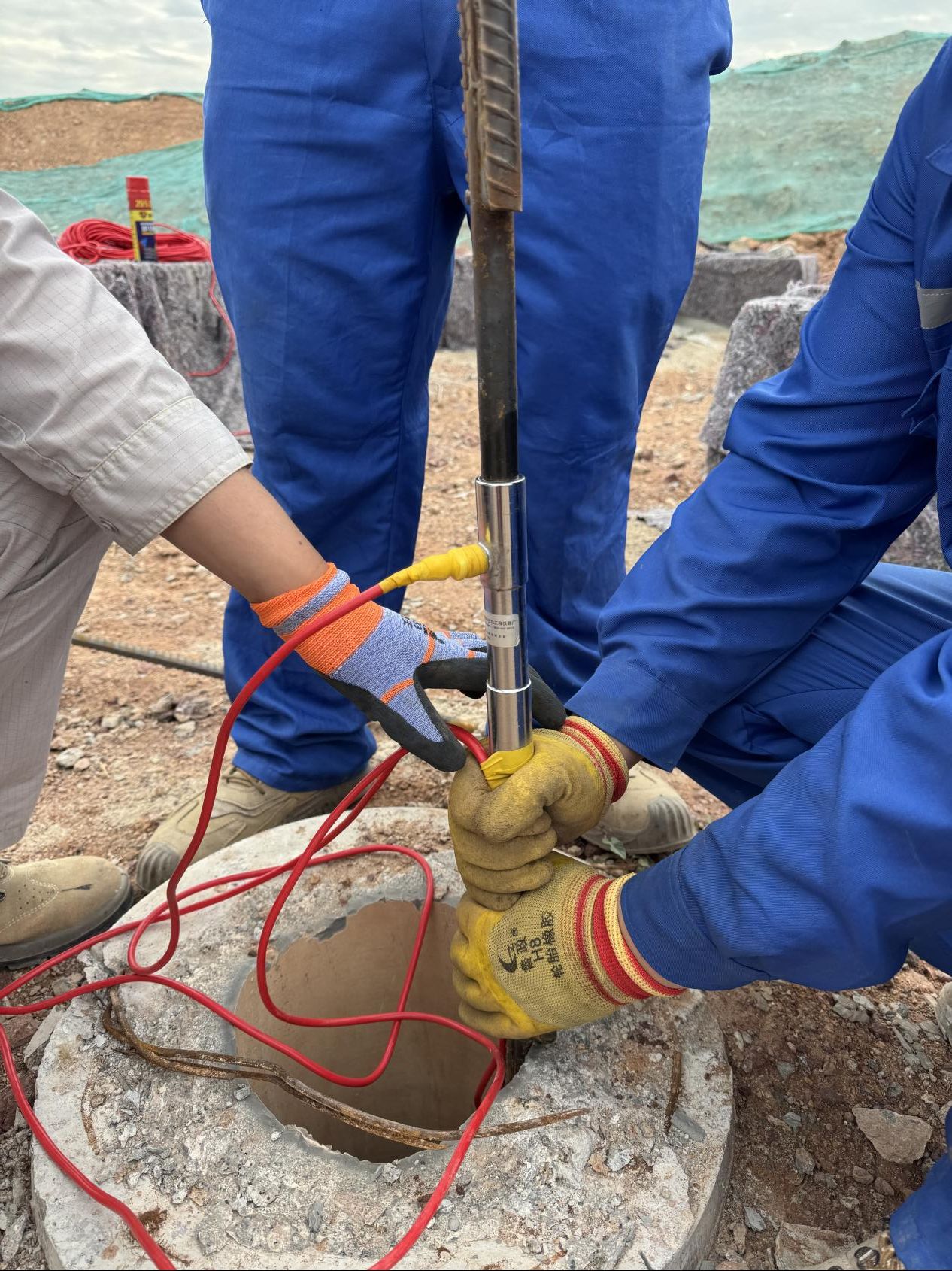
Internal force monitoring of the rigid piles
The Ground Strider solution is also an evolution of the sparse-pile–stiffened-grid system first developed and implemented by our team 18 years ago for a Sinochem project in Zhuhai. By combining that earlier load-transfer concept with Enhanced Dynamic Compaction, refined composite-foundation analysis and digital monitoring, the present system represents a new generation of QUAMBO’s integrated ground improvement technology.
The Ground Strider solution combines scientific design, rigorous quality control, carefully managed construction and long-term stress-and-deformation monitoring. Its successful implementation has received strong recognition from both the EPC contractor and the project owner.
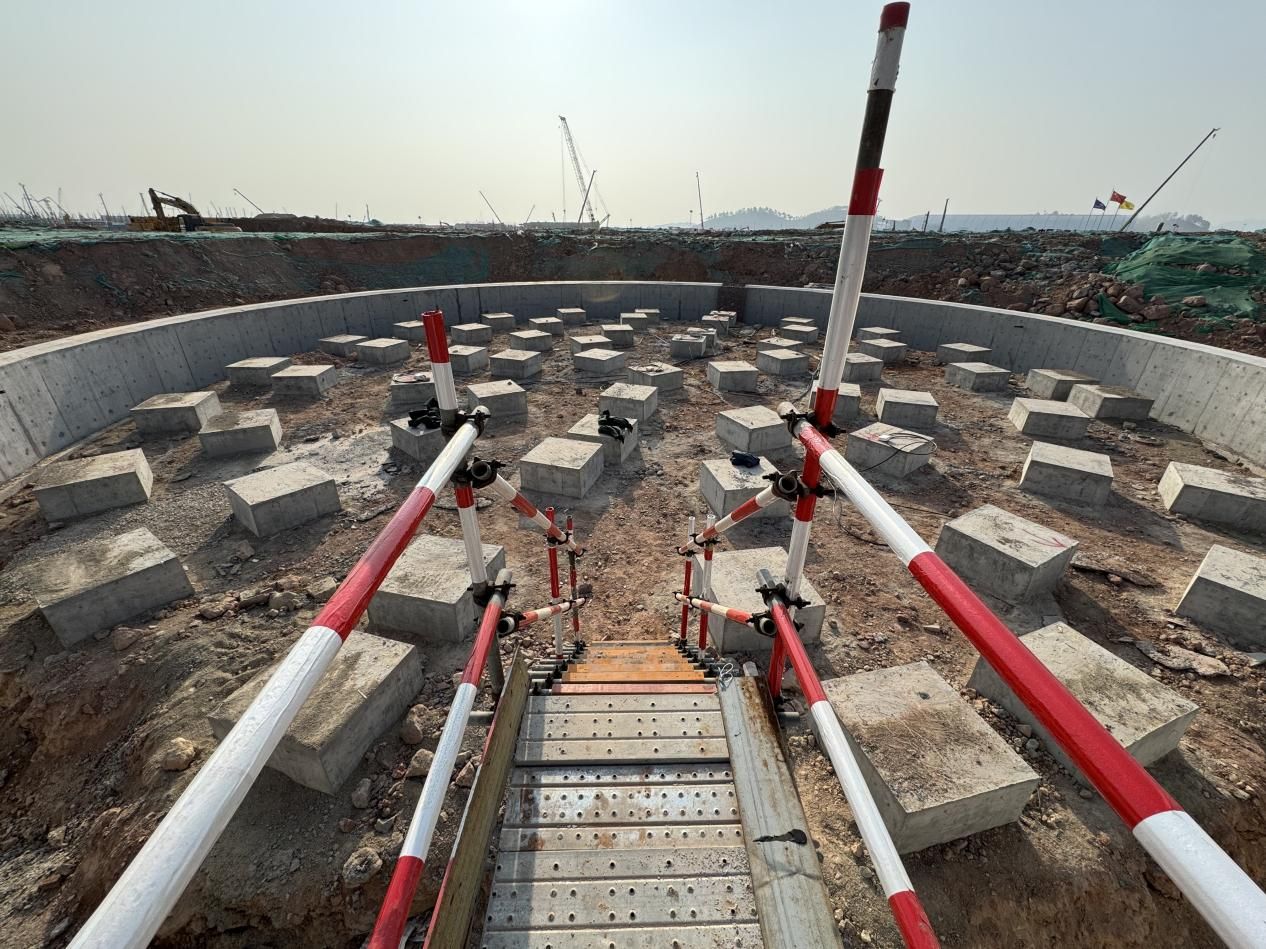
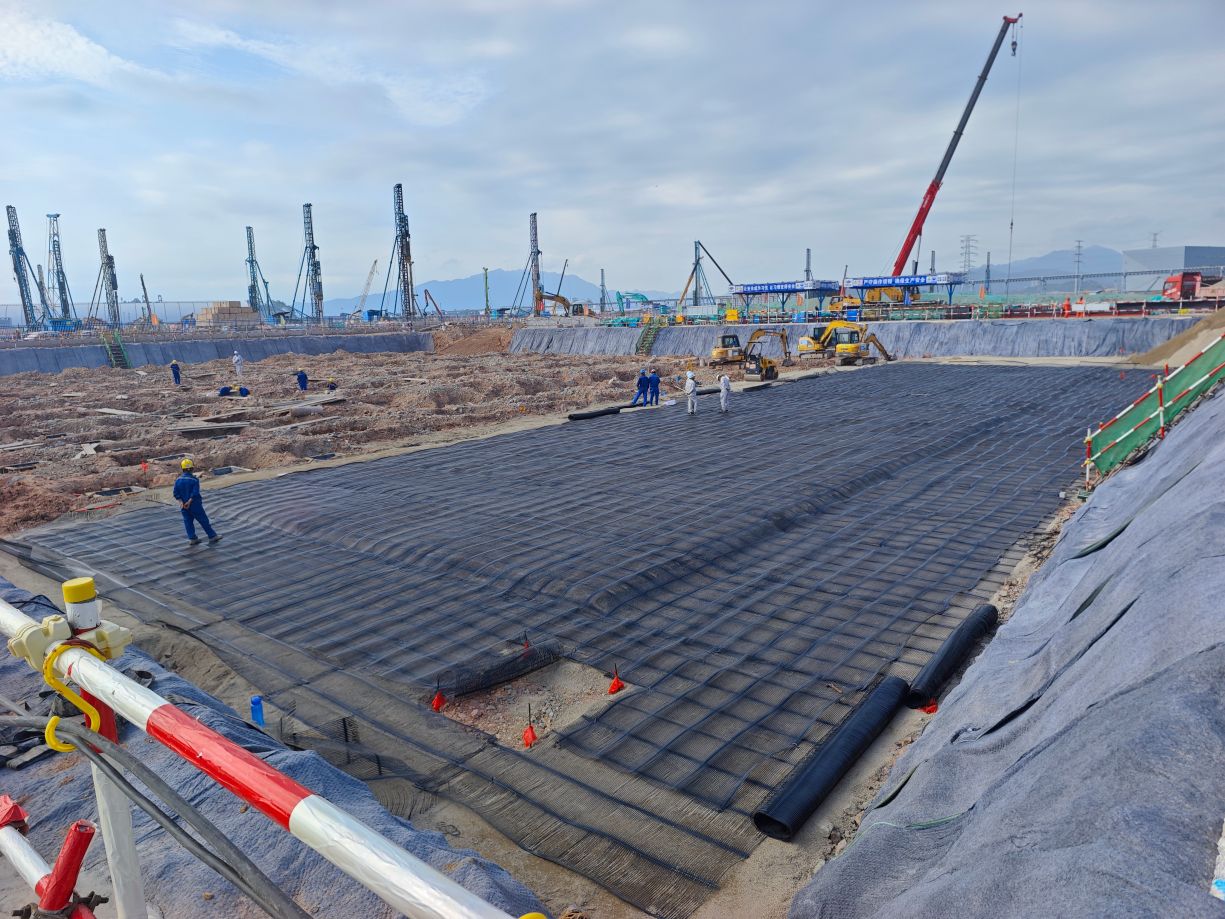
Pile caps forming part of the rigid-pile composite foundation / Completed granular cushion layer above the rigid-pile composite foundation
More importantly, the monitoring data and engineering experience generated by the project will support the continued development of more efficient, reliable and cost-effective foundation solutions.
The project forms part of a continuous technology-development cycle: Engineering Challenge → Technology Development → Design and Construction → Monitoring and Verification → Wider Application. At QUAMBO, we believe that engineering challenges should drive research—and that research must ultimately deliver practical value on site.
From concept development and field verification to construction and long-term monitoring, the Ground Strider project demonstrates how a deeper understanding of reclaimed-ground behaviour can lead to better foundation design. It also provides a strong technical foundation for further application of the system across petrochemical facilities, industrial plants, storage areas and other settlement-sensitive developments on complex reclaimed sites.
“Engineering needs drive innovation. Innovation empowers engineering practice.”
Creating Site Value Through Geotechnical Engineering