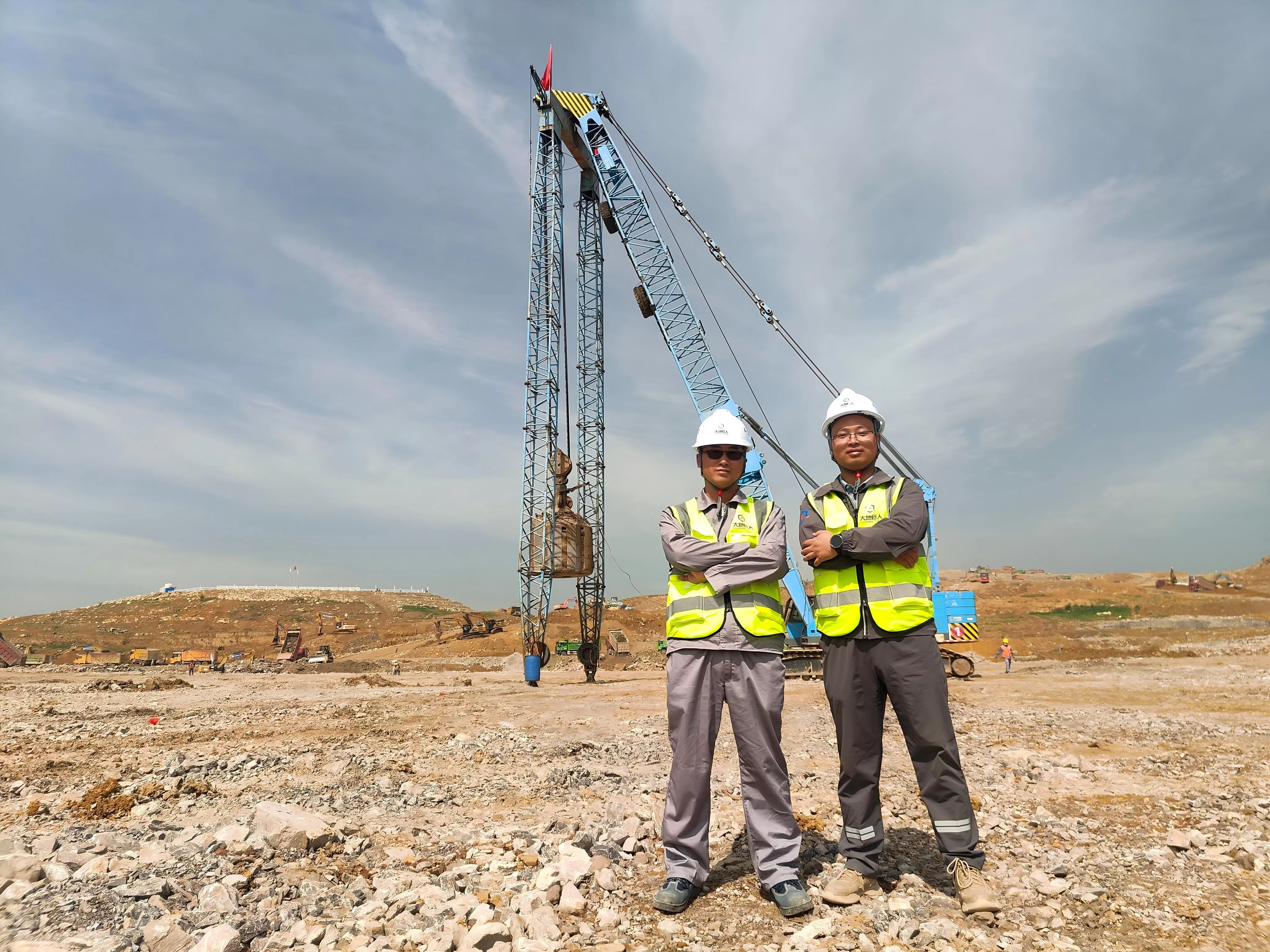
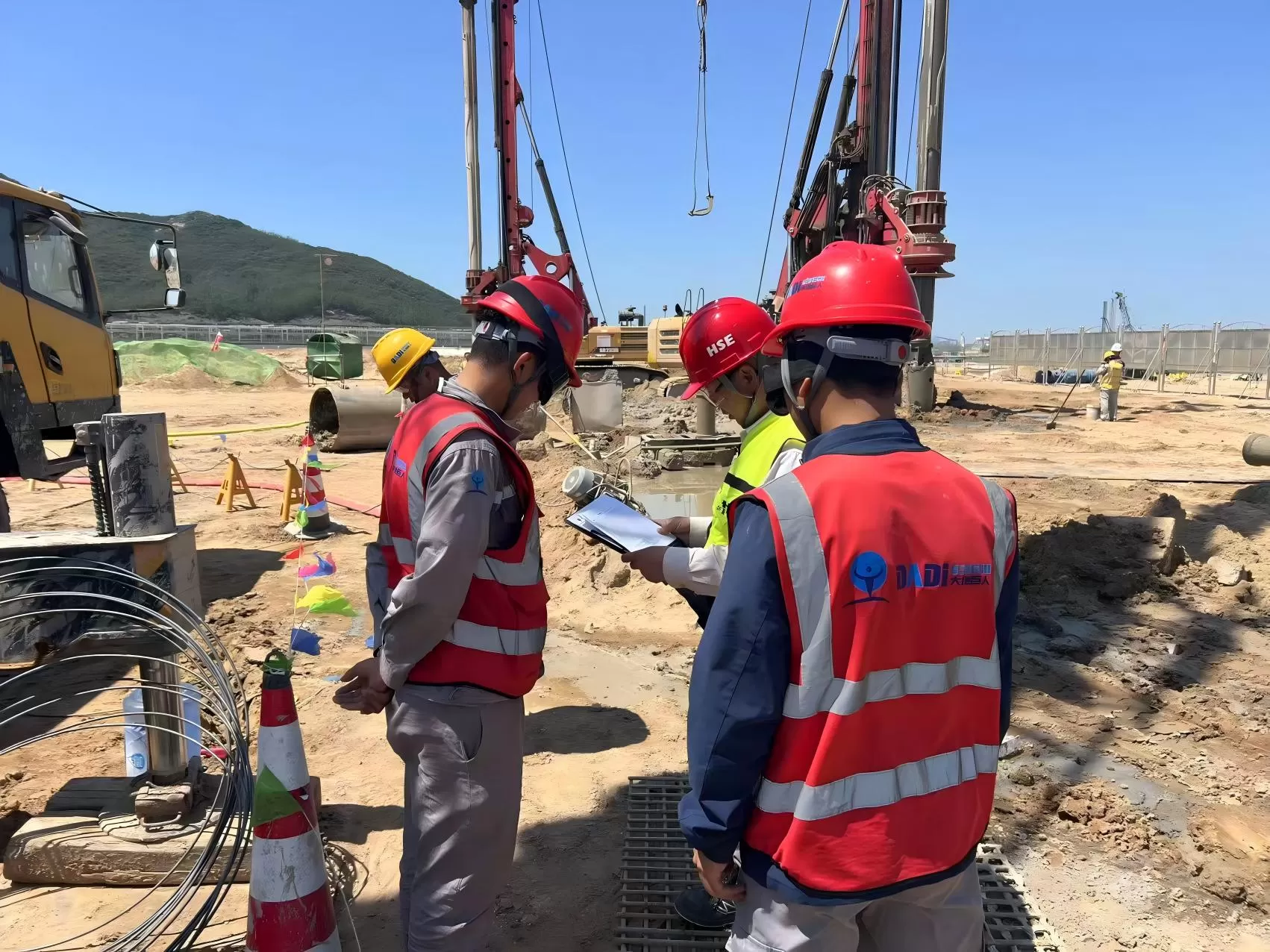





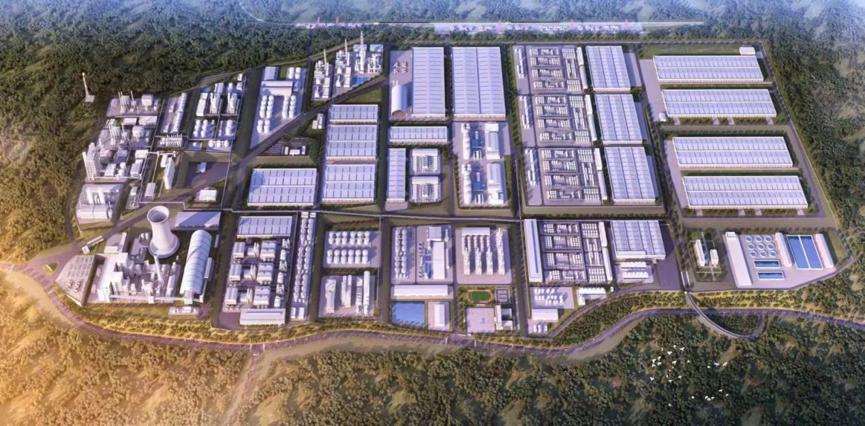
The Heyuan Derun Steel 6 Million-Tonne Short-Process Special Steel Project is a major industrial development located in Lantang Industrial New Town, Zijin County, Heyuan, Guangdong Province, China.
The first phase covered approximately 760,000 square metres. The original site consisted predominantly of hilly terrain, with elevations ranging from approximately +52 metres to +129 metres and an overall elevation difference of about 77 metres.
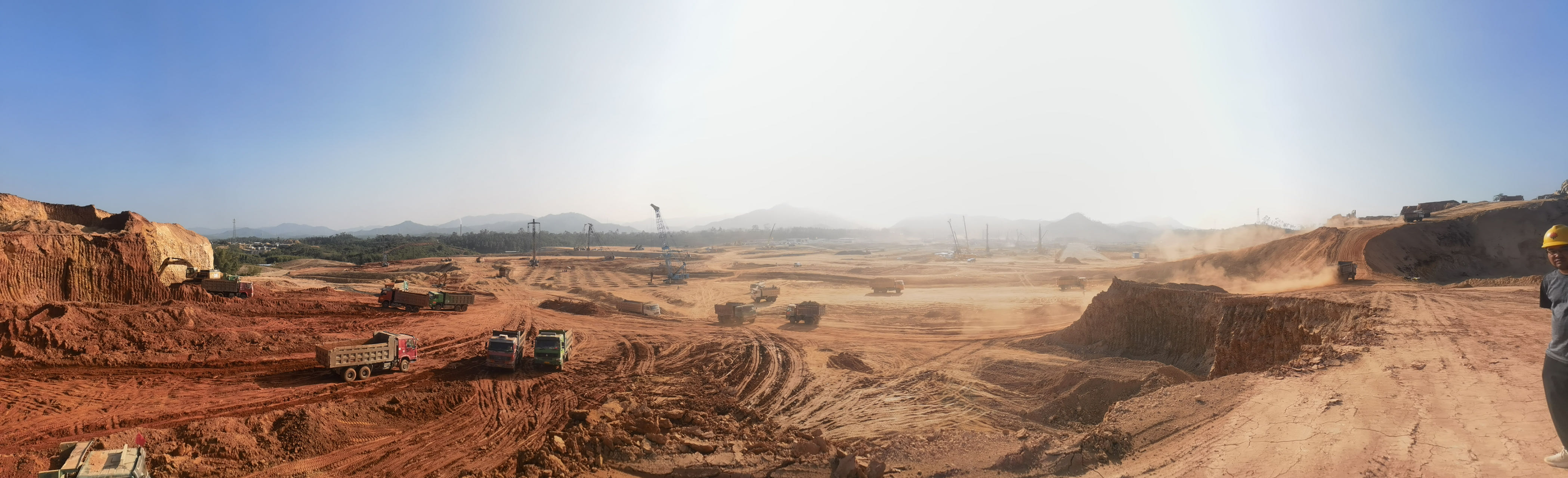
The site formation scheme required extensive excavation and filling to create the proposed industrial platform. Earthworks were generally balanced within the site, while the maximum engineered fill depth reached approximately 24 metres.
To provide suitable foundation conditions for the proposed steel production facilities, the ground improvement design had to address weak natural ground, exceptionally deep fill and the stringent settlement-control requirements associated with heavily loaded industrial structures and equipment.
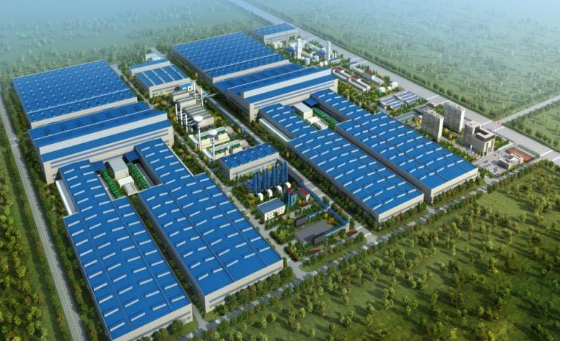
The steel production facilities imposed high and broadly distributed foundation loads. Controlling the settlement of the newly placed fill was therefore one of the principal geotechnical challenges.
With fill depths reaching approximately 24 metres, the site could not be formed through uncontrolled bulk placement. The filling sequence, layer thickness, treatment method and selection of fill materials all required careful coordination to achieve consistent ground performance throughout the platform.
Relatively deep deposits of weak soil were also present in the lowest parts of the original terrain, particularly within former gullies and pond areas. If these materials were left untreated beneath the deep fill, they could cause substantial total settlement and differential settlement across the completed site.
The variation in fill depth across the hilly terrain created further challenges. A single ground treatment specification would not provide the required treatment depth or compaction performance in every area. The dynamic compaction energy therefore had to be adjusted according to the local fill thickness and underlying ground conditions.
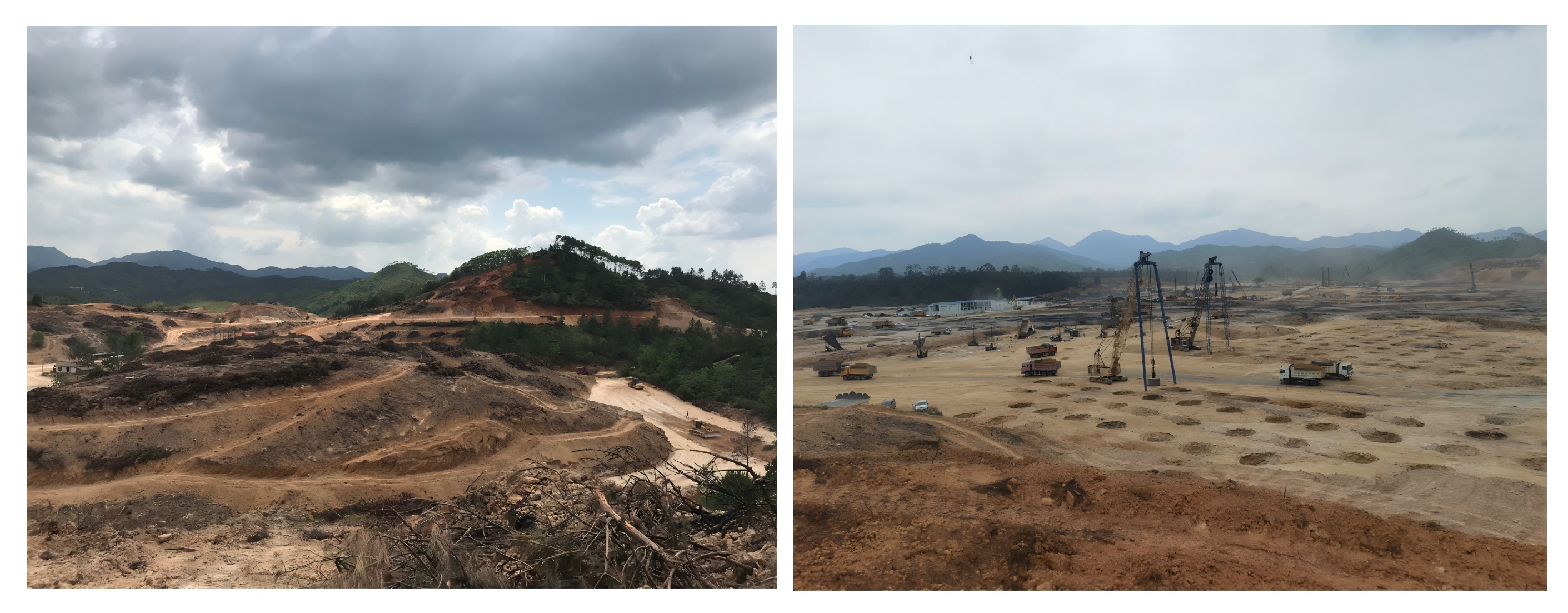
QUAMBO developed an integrated high-fill ground improvement solution that coordinated treatment of the existing weak ground with controlled layered filling and staged dynamic compaction.
The treatment method and dynamic compaction energy were differentiated according to the original terrain, fill depth and anticipated ground performance requirements. This allowed the existing foundation soils and the newly placed fill to function as a coordinated ground system.
Treatment of Existing Weak Ground
Before large-scale filling commenced, local excavation-and-replacement treatment was carried out in former gullies, pond areas and other low-lying zones containing weak soil.
The typical replacement depth was approximately 2 metres. This removed unsuitable near-surface materials and established a more stable foundation layer beneath the subsequent engineered fill.
Treating these weak areas at the beginning of the site formation process reduced the risk of localised compression and differential settlement developing beneath the deep fill platform.
Layered Filling and Dynamic Compaction
The engineered fill was placed in controlled layers with a typical thickness of approximately 4.5 metres.
After completion of each layer, dynamic compaction with an energy level of approximately 3,000 kN·m was applied to improve the density, uniformity and overall integrity of the fill before placement of the succeeding layer.
The alternating sequence of filling and dynamic compaction divided the deep fill into manageable treatment stages. This provided more effective control than attempting to improve the full 24-metre fill depth only after completion of the entire platform.
Higher-Energy Treatment for Deeper Fill
In areas where the thickness of an individual fill stage could exceed approximately 5 metres, higher dynamic compaction energy levels of 5,000 kN·m and 8,000 kN·m were adopted as required.
The variable-energy approach allowed the treatment depth and compaction effect to be matched to the actual fill geometry and site conditions. It also improved the uniformity of the completed platform where substantial variations in fill depth occurred across the original hilly terrain.
By integrating weak-ground replacement, controlled layered filling and differentiated dynamic compaction, QUAMBO established a practical ground improvement solution for the project’s deep-fill conditions and demanding settlement-control requirements.


-
SolutionsHigh Fill & Reclamation Engineering
-
MarketsRenewable Energy & Advanced Materials
Bijie Phosphorus–Coal Chemical Integration Project High-Fill Site Formation and Ground Improvement Works
 Guizhou Zhijin Economic Development Zone, Zhijin County, Bijie, Guizhou Province, China